

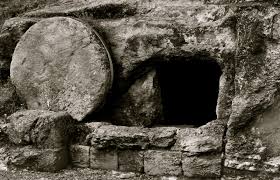
 Q. This Easter season, how can I convince my friends that Jesus physically rose from the dead? It’s been especially difficult for me to do this because my friends are either a) not Christians, or b) they don’t believe the Bible is the Word of God. They simply think it’s a merely human book that contains things Christians believe.
A. The good news is that it is possible to show your friends plausible evidence that Jesus rose bodily from the dead. And you can do this without even appealing to the authority of the Church, or to the Bible as the Word of God. It’s called the “Minimal Facts” approach, popularized by Dr. Gary Habermas. There are five historical facts concerning the Resurrection of Jesus that must be accounted for, no matter what one believes. They are:
1. Jesus died by crucifixion. This is an event of history that is recorded outside the Bible. Many non-Christian historians, such as Josephus and Tacitus, wrote about it.
2. The tomb of Jesus was empty on Easter Sunday. All parties, both Christians and the enemies of Christ, agree that Jesus’ tomb was found empty on Easter Sunday. The fact that opponents of the Christian message admit this gives us the very best type of evidence for our case, called “enemy attestation”.
3. Jesus’ disciples were willing to suffer and die for their belief in the Resurrection. While many people are willing to die for what they believe is true, no one willingly dies for what they know to be a lie. The Apostles knew whether or not they had encountered the Risen Jesus in the flesh.
4. The Church persecutor known as Saul the Pharisee converted to the Catholic Christian faith, became Paul the Apostle, and was martyred for his faith in the Risen Jesus. This is an unimpeachable historical fact.
5. The skeptic James, a relative of Jesus, converted because the Risen Jesus appeared to him. James became the Bishop of Jerusalem and a martyr.
There are many more facts that we could mention, such as the evidence of the appearances of the Risen Jesus in his physical body to various individuals and groups , including 500 people at one time. This shatters the erroneous theory that Jesus’ disciples were ‘hallucinating” when they thought they saw Jesus. Hallucinations are individual occurrences and cannot be shared. Plus, they do not account for the empty tomb.
Whatever explanation one comes up with to attempt to explain our “minimal facts” listed above, one’s explanation must account for all of these facts, and must do so more persuasively than alternative arguments. The only explanation that accounts for all of these facts in such a manner is the conclusion that Jesus was Resurrected.
 Q. The movie Noah, starring Russell Crowe, has inspired me to look into the biblical Noah. What does the Bible say about Noah and the Flood in Genesis 6:5-8:22?
 A question I get asked a lot, especially because of my work with new converts, is “What are the things I should be doing to live an effective Christian life?” What these people are essentially looking for is a skeletal structure for their life, so that their faith becomes integrated into it, not an add-on.
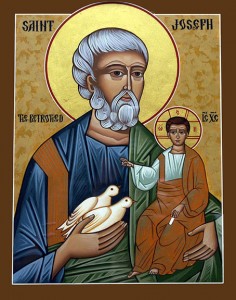 Today, March 19, Holy Mother Church gives her children a treat amidst our regular Lenten practices. There are a couple of solemnities that usually fall on Lenten weekdays. One is the great Feast of the Annunciation on March 25. The other is today’s Feast of Saint Joseph, patron of the universal Church.
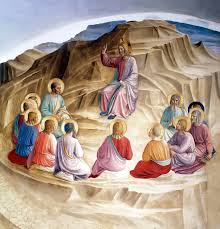 Q. In this Sunday’s Gospel, we have the most important section of the Sermon on the Mount in the Gospel of Matthew. Why is this material so crucial?
 One axiom in biblical studies that needs to go away forever is the so-called “Messianic secret”. I can’t tell you how many times I’ve heard this references in articles, commentaries, and sermons. What is the “Messianic secret”, you ask? It’s the idea floated by some Gospel scholars (especially of Mark and the other Synoptics) that Jesus was trying to keep his identity as Messiah a secret. This is allegedly why he doesn’t want people who he has healed to spread the news about him, and why he doesn’t allow demons to tell people who he really is, either (
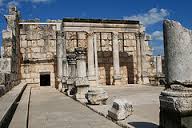 Why didn’t Jesus allow the demon he exorcised in today’s Gospel (Mark 1:21-28) to tell people who Jesus really was? Two reasons:
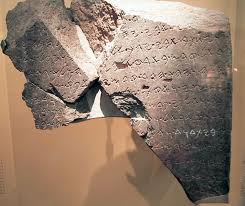 Over the next while, I’ll be sharing some things I learned on my recent study trip to Israel this past summer. As well as taking a course taught by my program supervisor, the world-famous Dr. Craig Evans, I also had the chance to travel around “the land” with the good professor and another grad student, Greg Monette. The three of us worked on an archaeological dig at Mt. Zion (more on that later), and met with scholars and archaeologists at universities and at other digs, like the impressive project at Magdala.