
 My family and I had just spent a great day on Toronto’s Centre Island last week. We had just stepped off the boat that had taken us back to the harbourfront downtown, when we were confronted by about 2,000 Pokemon Go players, standing around in their virtual world, trying to catch a few more pocket monsters. Most of them were oblivious to the actual people trying to get by them and get home.
Now, the Pokemon Go craze, despite people falling off cliffs and driving off roads while playing, isn’t all bad, I guess. It does get some couch potatoes out of the house and (partially) into the real world. There’s an aspect of cameraderie to it, too. It’s a way to meet new people. But, as I walked by the hordes of folks staring at their screens, completely oblivious to the gorgeous full moon, our breathtaking city skyline on a summer night, or any of the people around them – in short, actual reality. I was reminded of a great article by Christopher Check, President of Catholic Answers, about the “e-slavery”, as he calls it, of our times.
Writing in Catholic Answers Magazine, Check notes, speaking of modern smartphones and other gadgets:
These devices and systems too often deliver, like the contraceptive, the opposite of what they promise. They promise freedom but create dependence. Rather than strengthening human relationships, they make them more trivial and more abstract. They addict us to novelty. Far from making the truth easier to uncover, they make the truth harder to discern. Worst of all, they are obstacles to our relationship with the divine.
The personal, social, cultural, and spiritual costs of living in the Age of Technology are interrelated, and they demand more analysis than a single article can offer, but the reflections of G.K. Chesterton on the technology of his own day provide an excellent point of departure for reconsidering what we have so uncritically welcomed into our lives.
Later, Check comments on a great quote from Chesterton, who, ironically, would have been incredible on Twitter (the platform seems tailor-made for his witty one-liners):
“It is the beginning of all true criticism of our time to realize that it has really nothing to say, at the very moment when it has invented so tremendous a trumpet for saying it” (G.K. Chesterton, “The Proper View of Machines,” Illustrated London News, February 10, 1923).
Not only are our conversations rendered more trivial as we make more use of these devices, but our relationships are similarly rendered more abstract. Face-to-face conversation gave way to telephone chats, which have been replaced by e-mail messages and text shorthand. Hiding behind avatars—which is really nothing more than lying—chat-room and Web-forum members imagine they are building friendships with one another, as they recycle URLs and trade meaningless one-liners.
Check goes on to detail how tech, as incredible and beneficial as it is to our lives, can have deleterious effects on society and on human relationships – even our relationship with God. Do yourself a favour and “check” it out. I’d say pun intended, but let’s face it – puns are always intended!
 On this Feast Day of St. Mary Magdalene, I thought I’d let you know about the incredible excavation going on at her hometown – Magdala, known as Migdal in Hebrew. In 2013 and 2014, I had the privilege of visiting the work at Migdal, along with Dr. Craig Evans, Greg Monette, Dwight Crowell and Jesse Richards. Migdal, which was built just next to the Sea of Galilee, is an incredible archaeological find – it’s unique in that the entire first-century town has been unearthed.
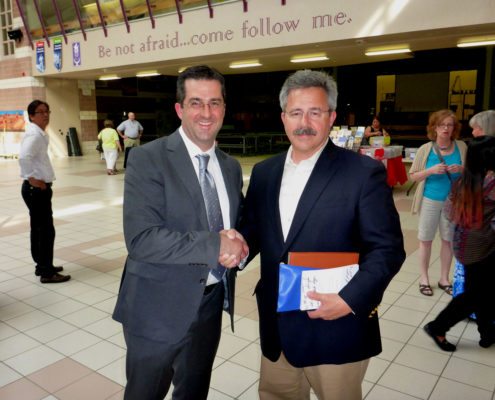 The Faith Explained Conference: Search and Rescue conference this summer was a great success! Hundreds gathered at Saint Joseph’s High School in Mississauga (in the greater Toronto area) to hear Patrick Madrid, Cardinal Thomas Collins, and yours truly talk about how to bring friends and family who have left the Catholic Church back home. Patrick’s the distinguished looking, mustachioed guy on the right (I call him the Catholic Church’s answer to Tom Selleck). I’d like to thank everyone who attended for being there, along with my amazing Faith Explained team, and all of our sponsors who made this event possible. I’d especially like to thank Cardinal Collins, EWTN, Verbum Catholic Bible Software, The Daughters of St Paul, and the Fulton J. Sheen Society for their support.
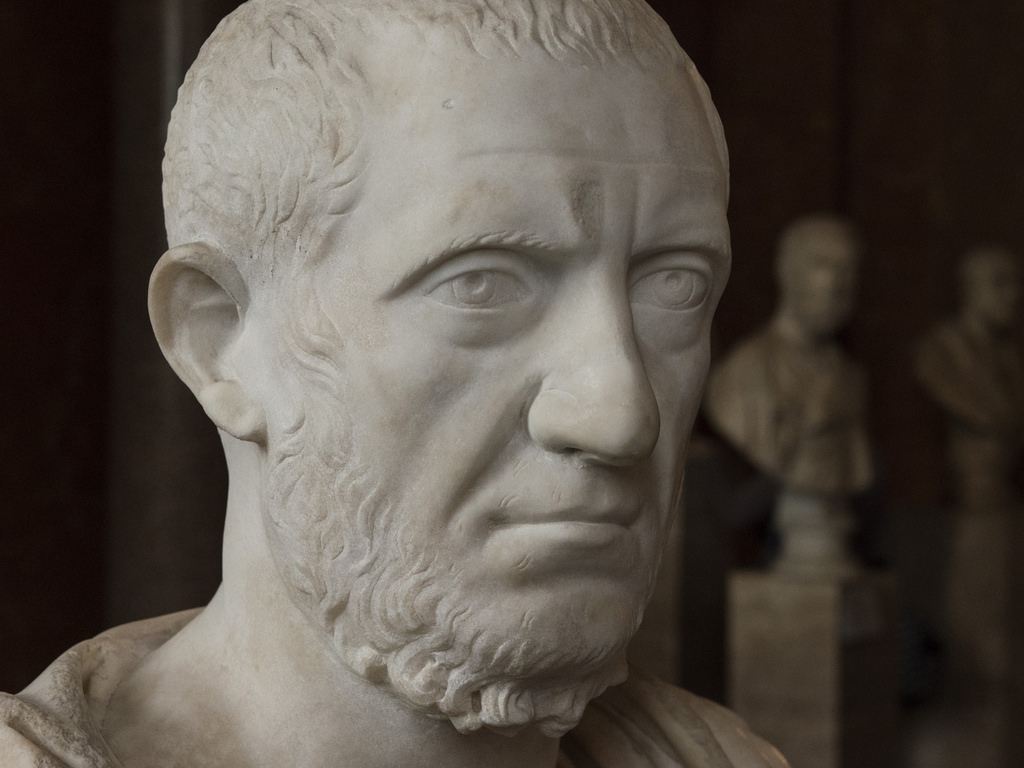
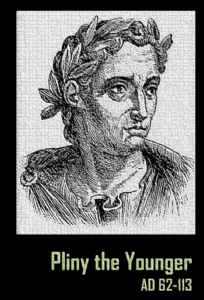 Pliny the Younger is another valuable historical source for information on Jesus and the early Church. Pliny was the governor of the Roman province of Bithynia, located in Asia Minor. In the year 112 AD, he wrote to the Emperor Trajan, asking how he should deal with those in his region who have been accused of being Christians.