
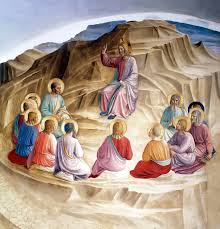
 Q. In this Sunday’s Gospel, we have the most important section of the Sermon on the Mount in the Gospel of Matthew. Why is this material so crucial?
A. Matthew is a very Jewish Gospel. It was not the first Gospel to be written (that, in all likelihood, would be the Gospel of Mark), but it is placed first in the New Testament canon because it is a natural bridge between the Old and New Covenants (in fact, the words “testament” and “covenant” mean the same thing).
Matthew highlights the mission of Jesus to Gentiles, to be sure (cf. 28:19-20). But he is striving to show to his fellow Jews that Jesus was not, as he had been accused of being in Jewish circles, a lawbreaker – that is, he did not circumvent the law of the Old Testament. This is why Matt 5:17 is so crucial: “Do not think that I have come to abolish the law or the prophets; I have not come to abolish but to fulfill.”
In fact, when Jesus says, “Do not think…” he is referencing the Maccabean martyrs, who also preserved the law, despite hideous tortures at the hands of the pagan tyrant Antiochus IV Epiphanes: “But do not think that you will go unpunished for having tried to fight against God!” (2 Macc 7:19).
Q. But if Jesus isn’t “changing”, or altering the law, why does he give a series of examples prefaced by the formula, “You have heard it said…But I say to you…”?
A. What Jesus is doing here is bringing out the true meaning of the law – its correct interpretation, contra the erroneous takes on the law given by popular teachers of Jesus’ day. These examples are known as the “antitheses” of the Sermon on the Mount.
Far from abolishing the law, Jesus’ demands are even more strict than what was commonly taught in the Judaism of that time. Jesus deals with the inner attitudes of the heart, from which sins spring (cf. Matt 15:19). In this way, he highlights the true intent of the law, which was to transform the inner person, not simply to outlaw certain behaviors.
In one of the antitheses, for example, Jesus says, “You have heard that it was said, ‘You shall not commit adultery’ (Ex 20:14 = Deut 5:18). But I say to you that everyone who looks at a woman lustfully has already committed adultery with her in his heart” (Matt 5:27-28). Jesus then brings up the topic of divorce and remarriage in 5:31-32 (which Jesus says is adultery). This is very interesting in light of John the Baptist’s criticism of Herod Antipas’ illicit marriage to his brother Philip’s wife, Herodias, for which John paid with his life (Matt 14:1-12). Jesus strikes at the heart of the issue by correctly pegging the cause of adulterous divorce and remarriage as lust, from which indeed much sexual sin springs.
 He’s done it again.
 One axiom in biblical studies that needs to go away forever is the so-called “Messianic secret”. I can’t tell you how many times I’ve heard this references in articles, commentaries, and sermons. What is the “Messianic secret”, you ask? It’s the idea floated by some Gospel scholars (especially of Mark and the other Synoptics) that Jesus was trying to keep his identity as Messiah a secret. This is allegedly why he doesn’t want people who he has healed to spread the news about him, and why he doesn’t allow demons to tell people who he really is, either (
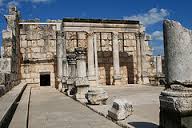 Why didn’t Jesus allow the demon he exorcised in today’s Gospel (Mark 1:21-28) to tell people who Jesus really was? Two reasons:
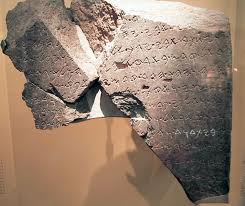 Over the next while, I’ll be sharing some things I learned on my recent study trip to Israel this past summer. As well as taking a course taught by my program supervisor, the world-famous Dr. Craig Evans, I also had the chance to travel around “the land” with the good professor and another grad student, Greg Monette. The three of us worked on an archaeological dig at Mt. Zion (more on that later), and met with scholars and archaeologists at universities and at other digs, like the impressive project at Magdala.
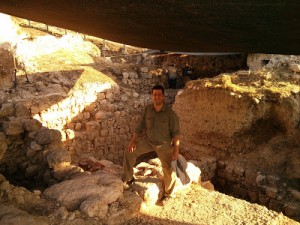 I was recently interviewed for the popular series on the Archdiocese of Toronto’s blog called “Faces of our Faith”. I was asked about why I began The Faith Explained Seminars, what the biggest need in the Church is right now, and a bunch of other fun questions. To check it out, go
 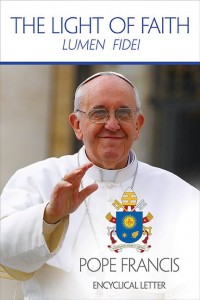 Pope Francis released his very first Encyclical letter today, called Lumen Fidei (“The Light of Faith”). In actuality, it was written by two Popes – Benedict XVI had begun the Encyclical some time ago, intending it to be the capstone to his trilogy on the three theological virtues of faith, hope and love. Due to his resignation, he was not able to promulgate Lumen Fidei himself – that task fell to Francis. But the new Pope did more than simply sign the document. He put his own stamp on the Encyclical in other ways – the introductory comments and the Marian section ending the document is likely from his hand. However, it is clear from the bulk of the material that Benedict’s mind and and thought are behind much of what is said, especially considering B16’s unique grasp of both pagan as well as Judeo-Christian history.
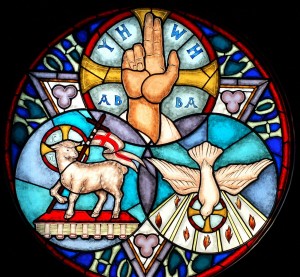 Q. This Sunday is the Solemnity of the Most Holy Trinity, and we Catholics are used to hearing about God the Father, God the Son, and God the Holy Spirit. But some Australian priests got a bit “creative” with the liturgy a few years ago, and began opening the Mass in a different way. Instead of saying, “In the name of the Father, and of the Son, and of the Holy Spirit”, they said this: “In the name of the Creator, the Redeemer, and the Sanctifier”. They were severely reprimanded by their bishop. Why was this such a big deal to the Church?